5mC and 5hmC together are highly effective as biomarkers for early-stage CRC detection in cfDNA. The figure (left) shows that the conventional 5-base methylation difference detectable at an enhancer region does not effectively differentiate healthy controls from stage 1.

See what’s missing.
Go beyond one-dimensional data.
Discover how 6-base sequencing outperforms conventional 4- and 5-base methods, extracting more insight from precious low-input cfDNA and FFPE samples.
Whether you’re working with genomic DNA, cfDNA, or FFPE samples, highly accurate 6-base sequencing enables dynamic, multidimensional analysis of epigenetic changes across the genome. To truly understand disease progression—and harness methylation patterns as biomarkers for early detection—researchers need advanced tools that deliver a comprehensive view of these critical marks.
6-base sequencing offers groundbreaking data, creating a paradigm shift for liquid biopsy and cancer research.
Early detection has the potential to transform the treatment and monitoring of diseases, like cancer, which is caused by changes to the genome and epigenome, characterised by somatic mutations and epigenetic reprogramming. Epigenetically reprogrammed tumour cells release DNA into the bloodstream, where methylation changes can be detected in cell-free DNA (cfDNA); however, traditional NGS methods are missing critical information to help identify early-stage cancers.
The study shows:
- 5-methylcytosine (5mC) and 5-hydroxymethylcytosine (5hmC) used as biomarkers act synergistically to improve the sensitivity and specificity of early disease detection.
- Methylation changes in 5mC and 5hmC enable for the tracking of tumour progression in cancer.
- In later-stage cancer multiple genomic regions are demethylated, which can be detected earlier in disease progression as an increase in 5hmC in the same regions.
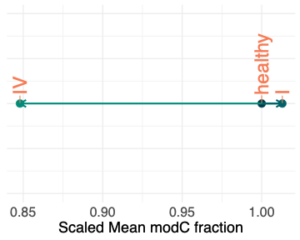
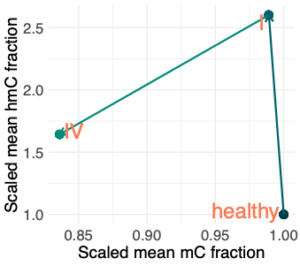
The figure (left) shows that by using the second dimension of 5hmC, provided by 6-base data, at this enhancer, the true biological picture is revealed, and it becomes possible to distinguish between healthy, stage I, and stage IV CRC from cfDNA.
FFPE samples are essential for cancer research—helping discover biomarkers for diagnosis, treatment options, and understanding efficacy. But formalin fixation introduces DNA damage (deamination, fragmentation, crosslinking), reducing NGS data quality.
6-base sequencing overcomes these challenges, retaining highly accurate genetic and epigenetic information—even in severely damaged samples.
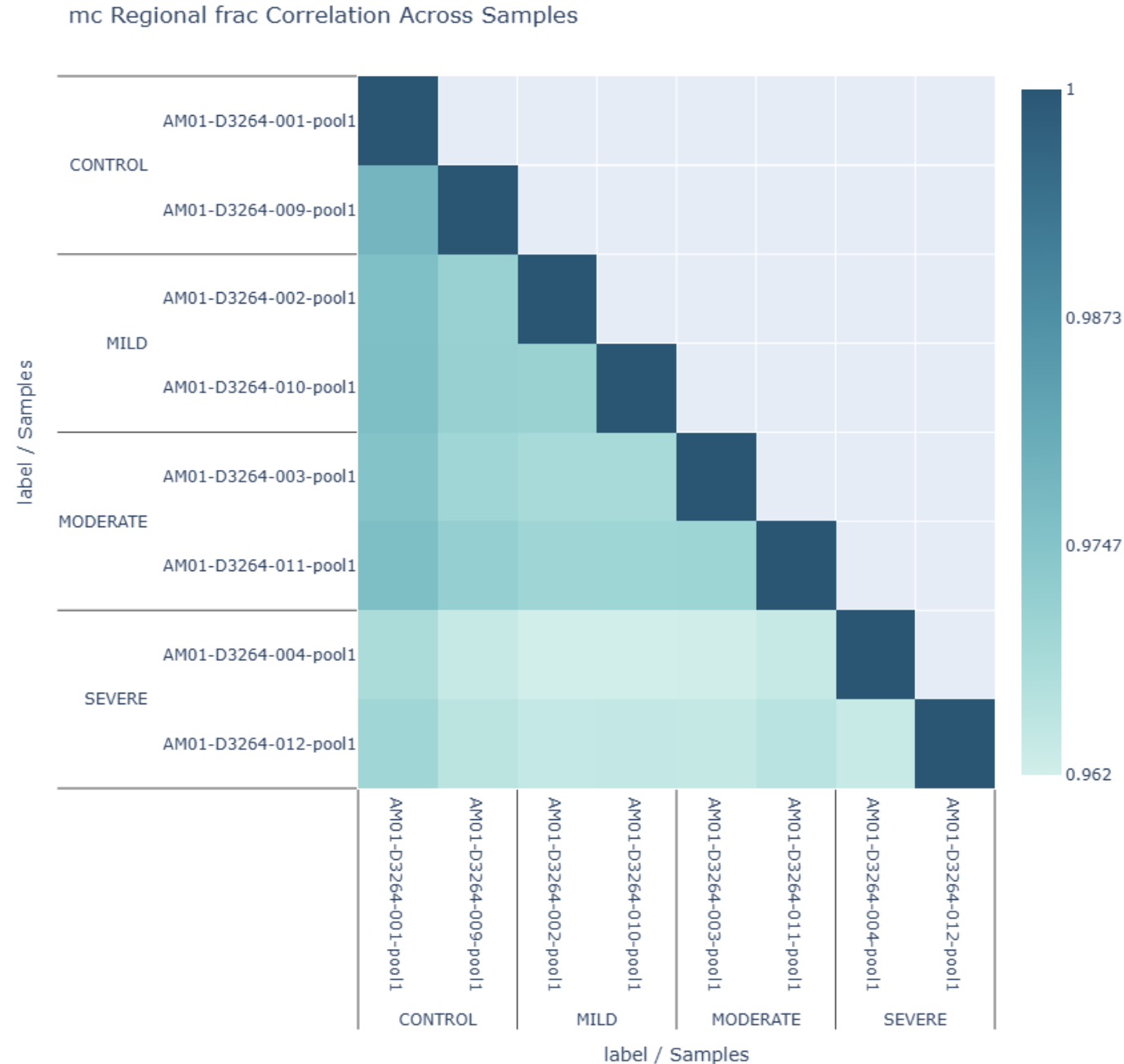
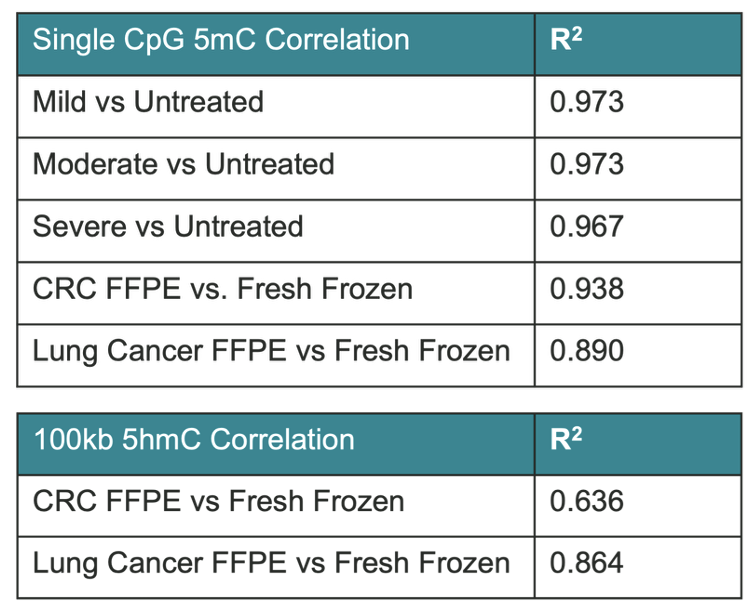
The 5mC Pearson correlation was generated using the modality XPLR analysis software, at single CpGs for duplicate libraries across fcDNA conditions. R² values >0.96 demonstrate highly reproducible methylation calling between diverse samples even with severe damage, reducing background noise and increasing confidence in biological insights derived from 6-base FFPE data.
Correlations for 5mC at single CpG level and 5hmC across 100kb windows shows matched clinical Fresh Frozen and FFPE samples also have very high 5mC correlation with R² of ~0.94 and ~0.89 for CRC and lung cancer, respectively. Clinical Fresh Frozen and FFPE samples show robust 5hmC correlation with R² of ~0.64 and ~0.86 for CRC and lung cancer, respectively, with the correlation partly drive by the lower prevalence of 5hmC in these samples (1.1-2.4%).
See what’s missing. Go beyond one-dimensional data.
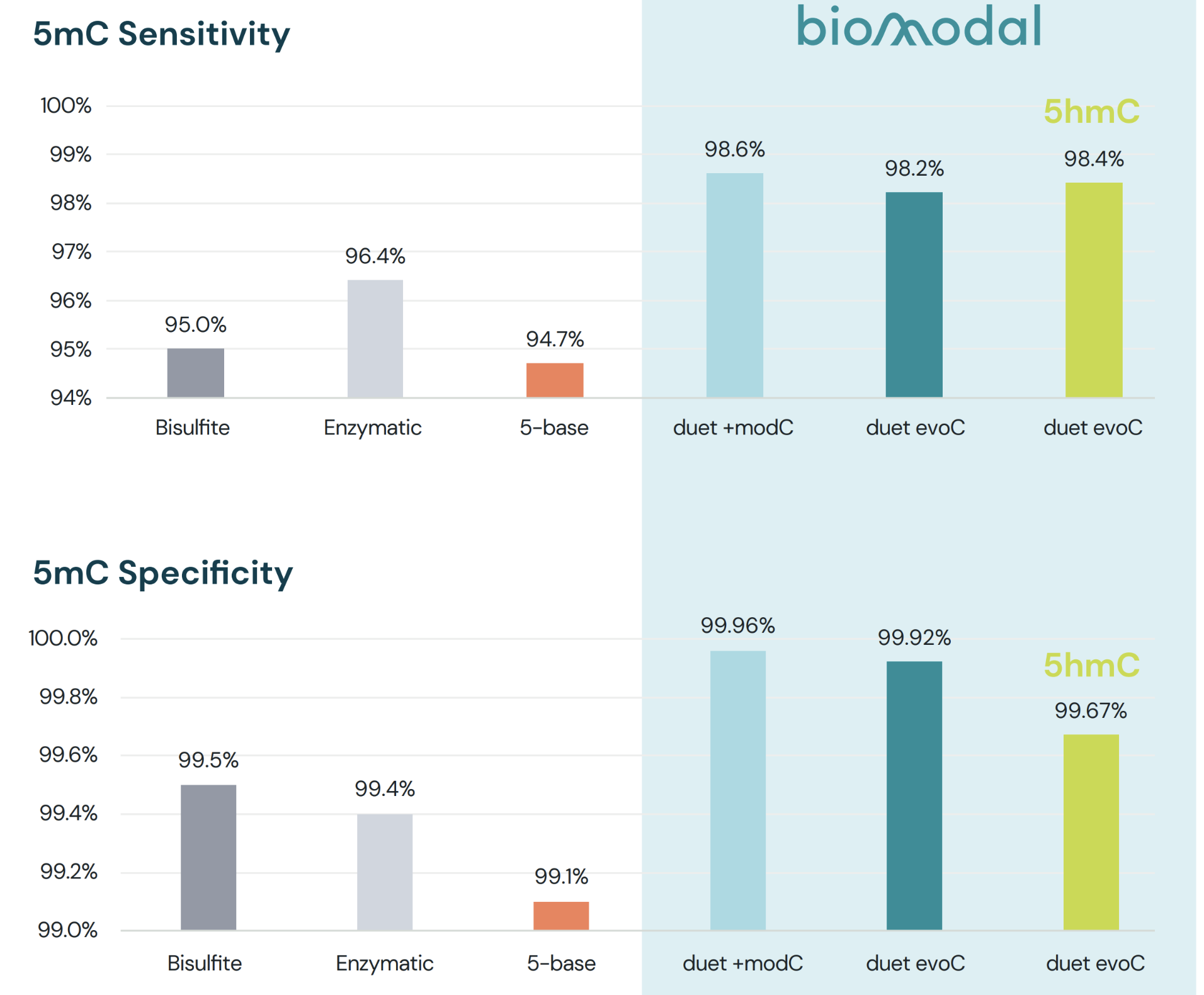
Performance metrics show biomodal's duet technology is best in class
- A comparison to published data on a 5-base product shows it is less sensitive and less specific than bisulfite
- biomodal’s duet multiomics solution +modC (5-base data) and duet multiomics solution evoC (6-base data) outperform all technologies for 5mC sensitivity and specificity
- biomodal’s duet multiomics solution evoC has the additional advantage of accurately detecting 5hmC as well, an important modification with biological significance.
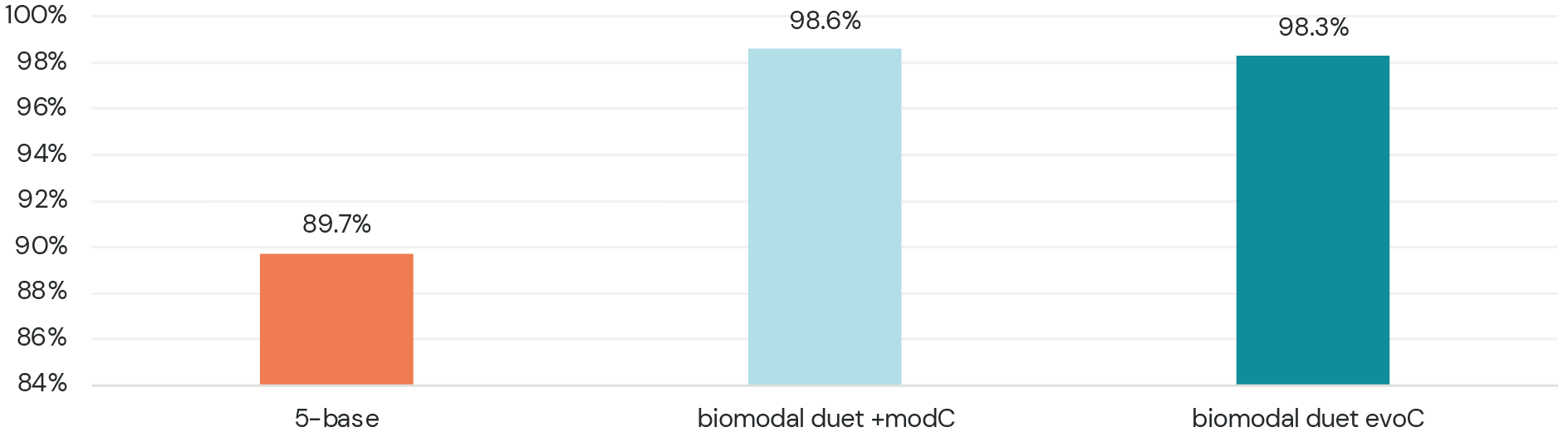
- Modified cytosine is reported when 5mC and 5hmC signals are summed
- biomodal’s duet products separately label and measure 5mC and 5hmC in each run, meaning the sensitivity of the solution to modified cytosine is high
- In comparison, the 5-base product only detects and measures 5mC
- Published data for the 5-base method shows ~5% error rate for calling 5mC
- On average ~5% of modified cytosines in human tissues are 5hmC which are not detected by the 5-base method
- Poor 5mC sensitivity and no 5hmC detection means ~10% of CpGs are missing or miscalled
Source: 5-base data from Fiona Kaper’s blog.
Patient-derived pancreatic cancer organoids showed significant growth inhibition when treated with decitabine, an epigenetic inhibitor. Noticeably, the combination of decitabine with a PARP inhibitor showed pronounced synergism in inhibiting tumour organoid growth. By employing the 6-base genome via duet evoC, Zachery Keepers and researchers at the University of Maryland have identified differentially methylated genes that may be responsible for therapy resistance and tumour aggression in pancreatic cancer.

"Circulating tumor DNA (ctDNA) analysis has become a promising and minimally invasive strategy for cancer detection and disease monitoring. Yet, in localized prostate cancer, detection of ctDNA remains highly challenging due to the low fraction of tumor-derived DNA in circulation. To address this limitation, we aim to develop a multimodal approach that combines epigenetic modifications with fragmentomic features. This integrative strategy is designed to improve both the sensitivity and specificity of ctDNA detection in early-stage prostate cancer. Multimodal approaches such as this hold the greatest promise for overcoming current technical barriers and enabling more reliable detection in the low-shedding context of localized disease."
Associate Professor Ellen Heitzer, PhDMedical University of Graz

