MLL MVZ Innovation Summit 2026

9 November 2026
to 10 November 2026
MLL MVZ
, 81377 Munich
, Germany

Visit biomodal at booth 

About the event

Join industry and academic leaders at the MLL Innovation Summit 2026, taking place 9-10 November. The summit will explore the latest advances in NGS and omics technologies, featuring sessions on fragmentomics, methylation, measurable residual disease, long-read sequencing, proteomics, single-cell biology, and high-throughput laboratory operations. Attendees will gain insights from expert speakers, real-world case studies, and networking opportunities with researchers and clinical scientists.

Introducing duet mosaicâ„¢
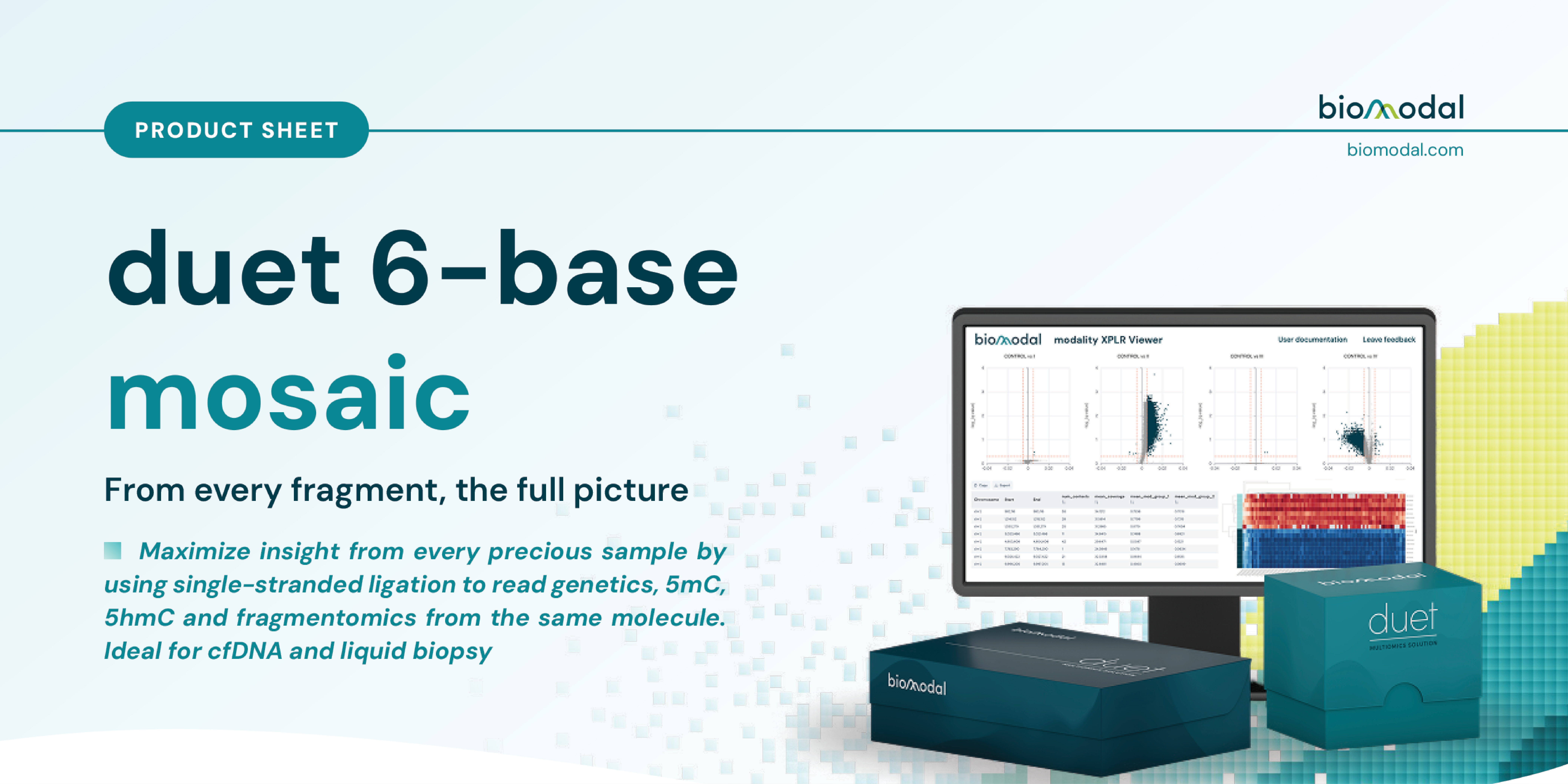
biomodal is also excited to introduce the newly launched duet mosaicâ„¢ family, new workflows designed for cfDNA and liquid biopsy research that combine genetic, epigenetic, and fragmentomic information from the same molecules, including short, damaged fragments other workflows may miss. When your sample is limited, every fragment matters, and duet mosaic helps researchers access more from every molecule.

 👉 Want to connect at the Conference – or sooner? Schedule time with Tom by completing the form below and let’s start the conversation.

Presenting at the event

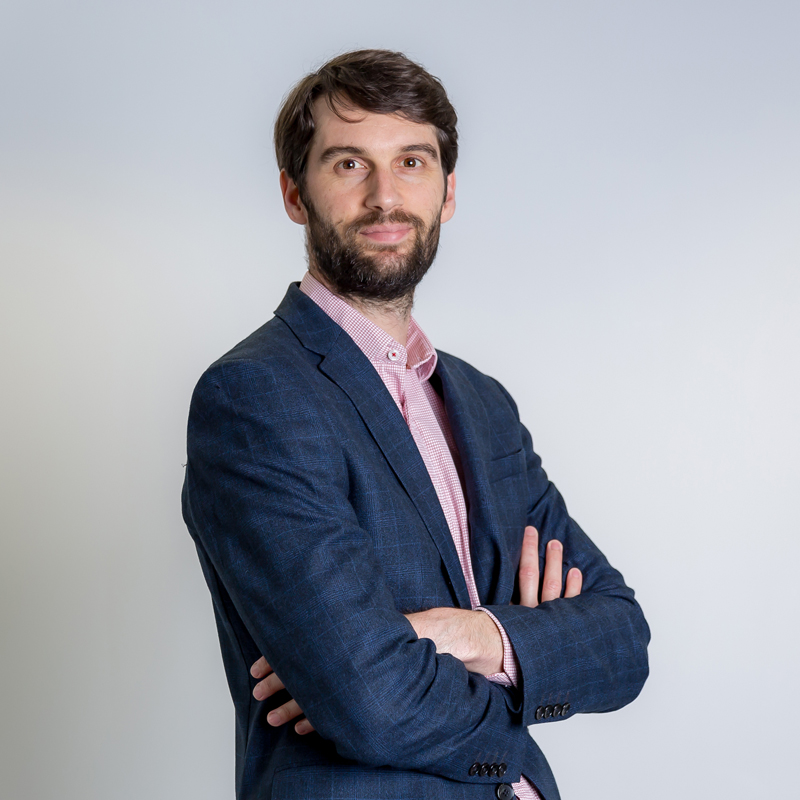
Improving liquid biopsy performance with multiomic 6-base biomarkers

Tom Charlesworth

Director of Market Strategy & Corporate Development

biomodal

Genetics has proven utility in liquid biopsy, especially in MRD and treatment selection settings. DNA methylation and fragmentomic biomarkers have enabled extension into early cancer detection settings, but performance is often not sufficient to justify the costs and risks of overdiagnosis.

The 6-base genome, provided by the duet 6-base workflow, includes genetics and fragmentomics but extends DNA methylation to differentiate 5hmC and 5mC, which have opposing biological roles. 6-base data therefore reveals methylation changes and novel end motif biomarkers that would otherwise be invisible. Recent improvements to duet have improved yield and data quality from cfDNA and have eliminated a hypomethylation artifact commonly seen in epigenetic sequencing workflows that can confound tissue of origin analyses.

The combination of 5mC and 5hmC biomarkers have been shown to improve the early detection of cancer from cfDNA. More recent data shows how the combination of 5mC and 5hmC with genetic and fragmentomic biomarkers further improves ctDNA detection. Not only can 6-base data improve ctDNA detection, it can also be used to accurately infer gene expression from tissue samples or cfDNA, which can be used to understand mechanisms of treatment resistance in the tumour.

These data demonstrate the potential for the 6-base genome to improve biomarker discovery, leading to better ctDNA detection and improved understanding of treatment response and resistance.

Find the venue

One sample. One workflow. One solution.

Here are the relevant biomodal resources for information. Find poster presentation information, case studies, interviews, and more.

Attending from biomodal

Tom Charlesworth

Tom Charlesworth, PhD

Director of Market Strategy and Corporate Development

Register now

Meet our team at the event

Share your details to schedule a meeting before, during, or after the event.

MLL 9-10NOV26

Stay up to date

Explore recent biomodal news and the events that we’ll be attending in the near future.

What are you looking for?