Our customers are breaking new ground with their research
Explore how biomodal customers are utilising the 6-base genome to gain unprecedented insights within cancer, neurodegenerative disease, ageing, and stem cell differentiation.
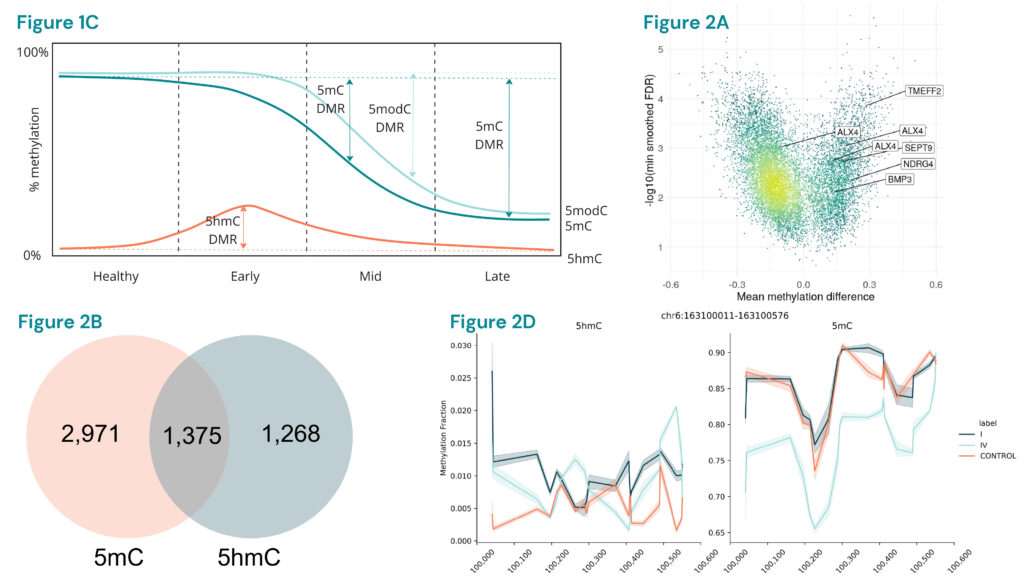
Our study investigates the roles of 5‑methylcytosine (5mC) and 5‑hydroxymethylcytosine (5hmC) as biomarkers for early-stage colorectal cancer (CRC) detection in cell-free DNA (cfDNA).
Learn how Associate Professor Alex Bick's lab at Vanderbilt University Medical Center conducted a multiracial meta-analysis of epigenome-wide association studies (EWAS) of Clonal Hematopoiesis of Indeterminate Potential (CHIP).
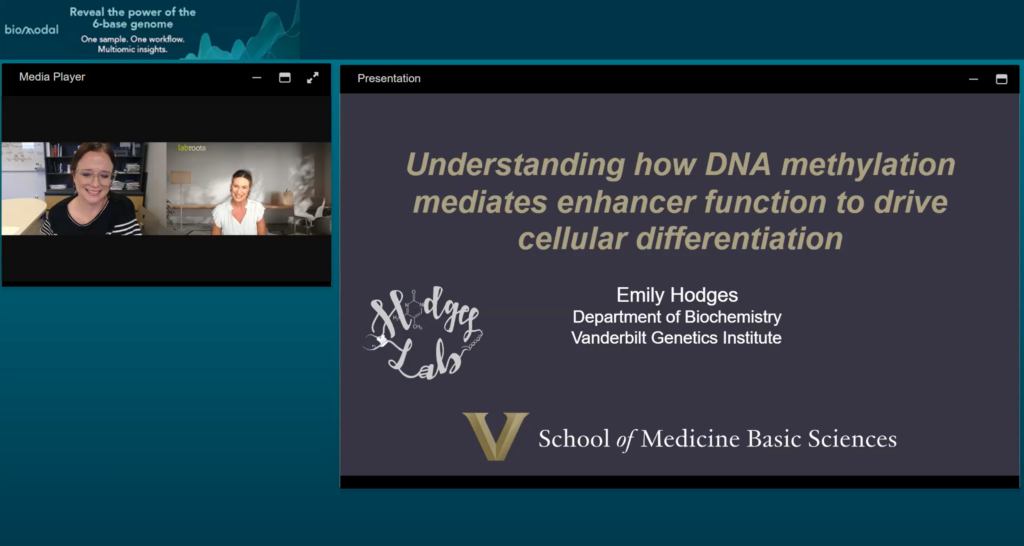
Assistant Professor Emily Hodges' lab at Vanderbilt University used differentiating neural stem cells as a model system to understand the relationship between DNA methylation and genome dynamics.
Exciting news, Professor Anjana Rao’s lab at La Jolla Institute for Immunology has published a new study with Nature Structural & Molecular Biology. Learn how 6-base sequencing can reveal early biomarkers of genome dysfunction.
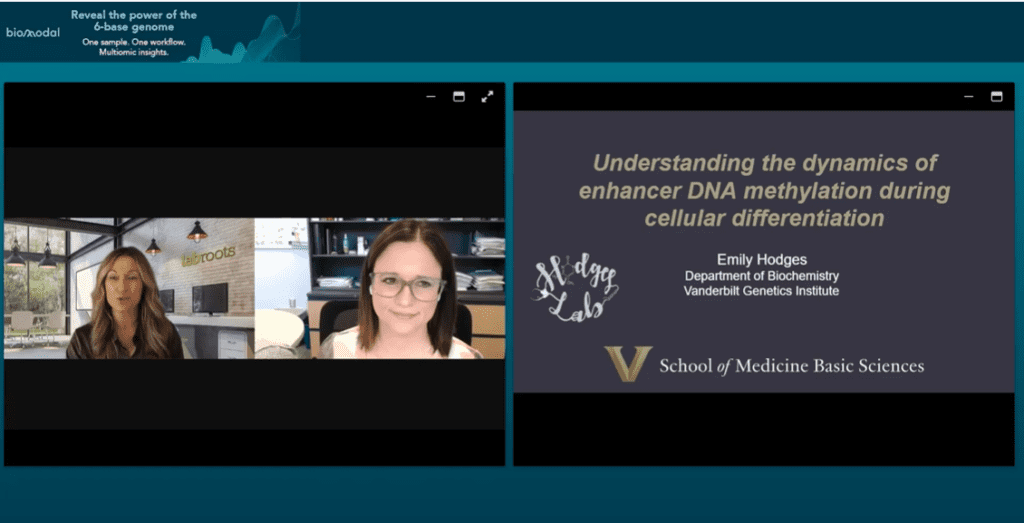
Join Emily Hodges, PhD, Assistant Professor of Biochemistry at Vanderbilt University, to learn more about how the Hodges Lab utilises 6-base genome to investigate the dynamics of enhancer DNA methylation during cellular differentiation.
In part 2 of this webinar, Emily Hodges, PhD, Assistant Professor of Biochemistry at Vanderbilt University, will reveal new data that illustrates how the Hodges Lab is utilising the 6-base genome.
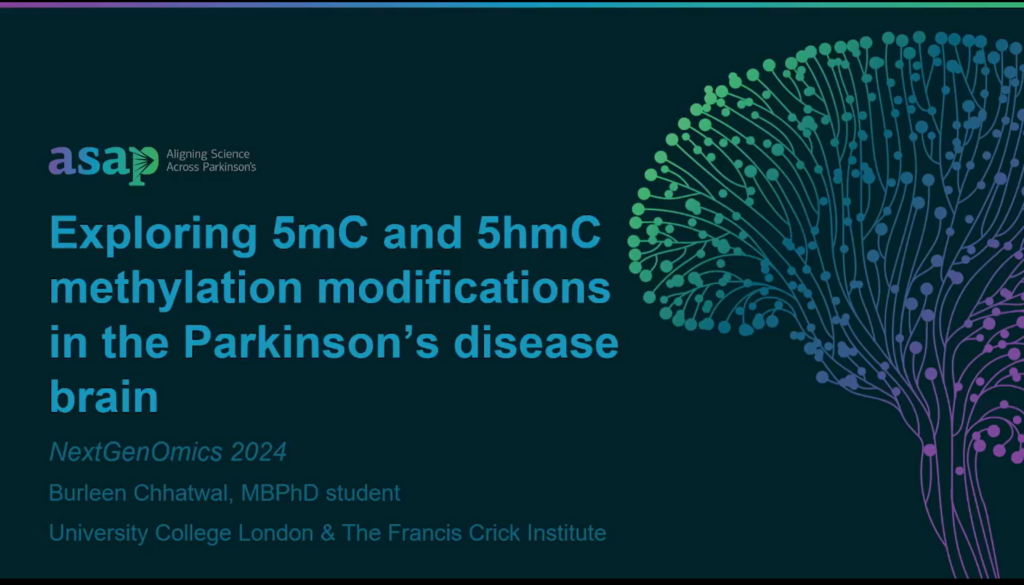
Burleen Chhatwal from University College London, UK, will demonstrate how biomodal’s 6-base genome supported the successful analysis of both 5mC and 5hmC modifications in Parkinson’s disease compared to controls in a pilot study.
Results from Professor Sarah-Jane Dawson's lab at the Peter MacCallum Cancer Centre and University of Melbourne suggest that profiling cfDNA with duet evoC would be very useful for the analysis of liquid biopsy samples to generate biologically relevant data for exploring early detection and disease progression in HCC.
Learn how 6-base sequencing reveals 5-methylcytosine (5mC) and 5-hydroxymethylcytosine (5hmC) have important roles in the regulation of genome dynamics. Deregulation of TET can spur an increase of 5hmC in heterochromatin which could potentially be an early biomarker of genome dysfunction that lead to diseases.
As well as helping researchers identify tumour DNA amid the soup of regular cell-free DNA, the fact that different tissues have distinct methylation patterns can help explain where the cell-free DNA might be coming from. “There are many advantages to being able to study epigenomics in concert with genomic features,” says Dawson.
Professor Ellen Heitzer’s lab at the Medical University of Graz analysed eight samples from localised PCa, metastatic PCa, and suspicious Pca (men with elevated serum PSA and/or suspect digital rectal examination but negative biopsy) using the duet multiomics solution evoC.
Most transposable elements (TE) lay dormant, buried under repressive epigenetic marks that ensure their influence over cell behaviour remains minimal. When they awaken, however, the consequences can be far reaching.
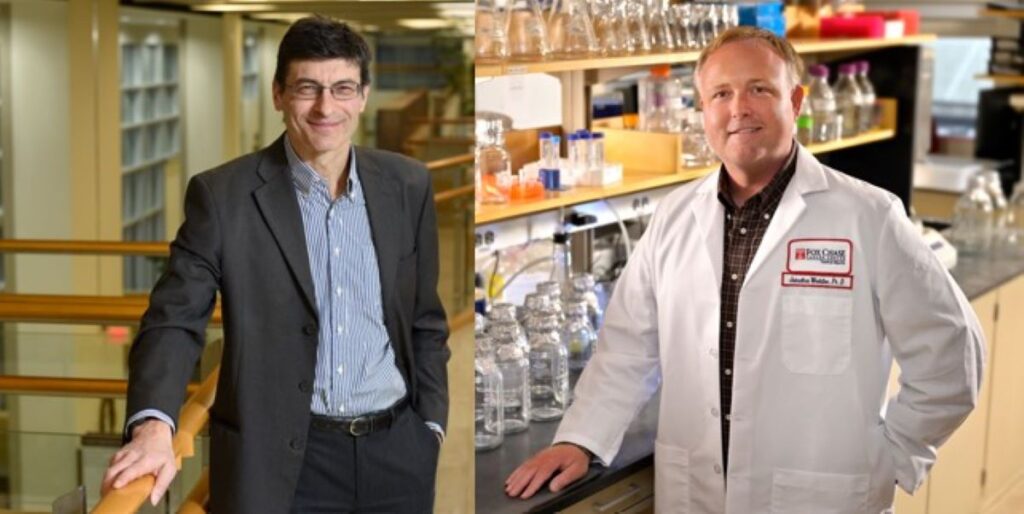
Alfonso Bellacosa, MD, PhD, a Professor in the Nuclear Dynamics and Cancer Research Program and Johnathan R. Whetstine, PhD, the Jack Schultz Chair in Basic Science, both at Fox Chase.
"We gain new insight when measuring the interaction of genetics and epigenetics on the same read… We look forward to progressing our research with technology and affecting a paradigm shift in the way cancer can be treated and monitored in the clinic."
"Circulating tumor DNA (ctDNA) analysis has become a promising and minimally invasive strategy for cancer detection and disease monitoring. Yet, in localized prostate cancer, detection of ctDNA remains highly challenging due to the low fraction of tumor-derived DNA in circulation. To address this limitation, we aim to develop a multimodal approach that combines epigenetic modifications with fragmentomic features. This integrative strategy is designed to improve both the sensitivity and specificity of ctDNA detection in early-stage prostate cancer. Multimodal approaches such as this hold the greatest promise for overcoming current technical barriers and enabling more reliable detection in the low-shedding context of localized disease."
“Unlocking new capabilities is crucial to better understanding the genome because the pre-cancerous mutations that we study are in genes that affect methylation and hydroxymethylation. Being able
to simultaneously read both the germline genetic variance and methylation helps us understand where the methylation is happening, which provides us with a better idea of how these inherited genetic
variants may shape the pre-cancer. The information you get is not possible to recapitulate with multiple assays, which makes this technology incredibly valuable to our research.”
"Accessing the 6-base genome and relating methylation and hydroxymethylation to specific variants in our breast cancer work could increase the sensitivity for ctDNA detection in liquid biopsy, enabling earlier detection. We also see promise in the ability of these methylation marks to determine gene expression, chromatin accessibility and gene regulation, and look forward to exploring this potential with the biomodal team."
"It's becoming more evident that distinguishing between 5mC and 5hmC modifications is crucial in order to understand the epigenetic landscape in detail. Current methods that are able to do this, are only able to do this separately, this leads to the need for multiple workflows and this increases the cost, time and sample requirements. In addition, methods such as bisulphite sequencing are very harsh on the DNA and this can lead to loss of samples throughout the analysis. duet evoC is able to overcome these issues and is able to identify 5mC and 5hmC modifications in a single workflow with a very low sample input of 5ng of DNA"
>
Let's make the next discoveries together
We can help you reveal new data and multimodal insights from your research.